The UK repair industry has spent decades worrying about one problem above all others, getting enough work through the doors.
Now the sector faces a stranger problem. Cars are still crashing. Claims volumes remain high. Vehicle technology keeps becoming more complicated and expensive. Yet a growing number of damaged vehicles never actually make it into a repair bay.
They are being written off first.
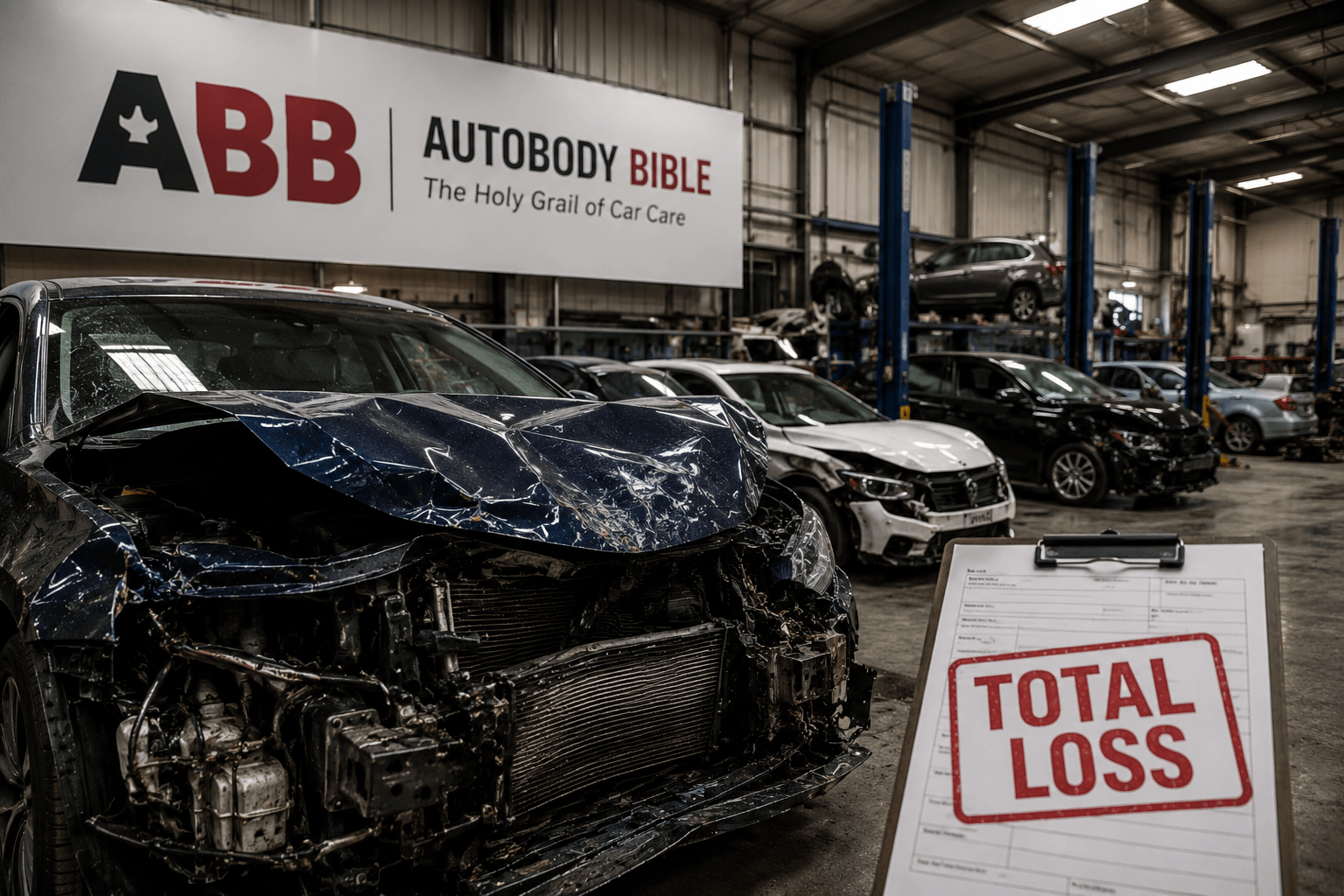
Quietly at first, then suddenly all at once, total losses have started swallowing parts of the collision market. In some vehicle segments, write-off rates are now edging toward 23% to 30%, while repairable claims volumes are reported to have dropped by more than 10%. That shift is starting to alter the economics of the entire UK bodyshop sector.
Walk into almost any insurer-focused repair centre and the conversation sounds similar. The jobs that do arrive are harder, slower and more technically demanding than ever before. But there are fewer of them.
That combination is toxic.
A decade ago, a medium severity repair often meant straightforward structural work, mechanical replacement, paint and refinish. Predictable. Profitable. Manageable. Modern vehicles changed that equation completely.
Now even relatively modest impacts can spiral into technical and commercial uncertainty.
A damaged EV sill panel may require battery isolation protocols, thermal monitoring, underfloor inspection and OEM diagnostic approval before anyone commits to repair. A bumper repair no longer means just plastics and paint. It means radar alignment, ADAS recalibration, sensor mounting tolerances and post-repair scanning. A cracked casting or bonded structural section can push an estimate beyond economic viability before the first panel is removed.
The irony is brutal. The industry invested heavily to prepare for the future, then watched parts of that future become economically unrepairable.
Repairers are feeling the strain from every direction at once. Overheads remain stubbornly high. Electricity costs climbed. Paint and consumables rose sharply. Skilled technician shortages never really eased after the pandemic years. Then came the pressure to invest in EV capability.
That investment was not optional.
Workshops wanting manufacturer approvals or insurer relevance needed insulated tooling, EV-safe workspaces, battery handling equipment, calibration systems and increasingly expensive training programmes. Some operators spent hundreds of thousands modernising facilities on the assumption that EV repair volume would steadily grow.
Instead, many are watching a percentage of those vehicles bypass repair entirely and head straight into salvage.
The problem is not simply repair cost. It is repair uncertainty.
Insurers can tolerate expensive repairs when the process remains predictable. What they dislike is open-ended risk. Modern EVs create plenty of that. A battery pack that appears visually unharmed may still require extensive investigation. A delayed diagnostic approval can add days to a hire bill. A missing structural component can immobilise a bay for weeks.
That uncertainty changes insurer behaviour.
Increasingly sophisticated AI-driven assessment systems now evaluate claims almost instantly using historical repair data, salvage values, regional labour rates, hire exposure and parts availability. Some repairers believe cars are being pushed into total loss categories faster than ever because algorithms prioritise financial certainty over repair exploration.
Insurers would argue the opposite. They would say the systems simply recognise economic reality earlier in the process.
Still, tension between the repair sector and insurers is growing sharper.
Bodyshops see wasted repair potential. Insurers see escalating claim severity.
Manufacturers sit awkwardly in the middle of that argument. Many repairers now openly question whether modern vehicle design still takes downstream repairability seriously at all.
Mega-castings became the symbol of that frustration. They reduce manufacturing complexity brilliantly. Investors love them. Factory engineers love them. Collision repairers were last in the decision process, for some vehicle manufacturers.
Replacement procedures may require manufacturer approved training, and there is a revelation – mega-castings are usually bonded and riveted into the main structure, so the repair process is completely different to extracting a welded sub-assembly – and with care, that’s not always more expensive.
Sectioning mega-castings is possible, but the joint – usually welded – to the remainder of the casting requires the very best welding skills.
Modern vehicles are incredibly sophisticated machines with multiple systems packaged into every possible space not occupied by humans. The biggest single issue is the sophistication of the vehicle build, which requires much more time to strip back parts to access the desired damage zone than ever before.
Then there is OEM parts pricing.
The conversation around parts inflation has become increasingly heated behind closed doors. Repairers talk privately about simple collision repairs becoming uneconomic because component pricing escalates beyond reason. Add calibration requirements, scan procedures and growing labour intensity, and total loss thresholds arrive frighteningly quickly.
All this lands at the exact moment workshops are struggling to maintain consistent utilisation.
Empty bays terrify bodyshop operators because fixed costs do not disappear when repair volume drops. Paint booths still need heating. Finance agreements still need paying. Technicians still need wages. A 10% fall in repairable claims volume can create major instability for businesses built around insurer throughput.
That pressure is driving another major shift inside the market, consolidation.
Larger groups continue expanding while smaller independents face increasingly difficult trading conditions. Scale now offers advantages that are hard to ignore. Multi-site operators can centralise diagnostics, negotiate stronger parts agreements, move work flexibly between sites and absorb fluctuations more effectively than standalone repairers.
Some independents are responding by moving away from insurer dependence altogether.
Customer-pay work, once viewed by many larger repairers as secondary revenue, is becoming strategically important again. Cosmetic repair, fleet support, dealer preparation work and non-insurance accident repair are regaining attention because they offer something insurers often do not, control.
There is also growing interest in green parts and remanufacturing.
That shift feels inevitable. The economics demand it.
If new OEM component pricing continues climbing, the industry will increasingly rely on recycled assemblies, remanufactured components and certified used parts to keep vehicles repairable. Insurers want lower severity costs. Consumers want lower premiums. Repairers want viable estimates. Recycled parts may become one of the few areas where everyone’s interests align.
The challenge is trust.
The industry still lacks universal standards around reused EV components and electronic assemblies. That debate is only beginning.
What feels increasingly clear is this, the UK repair industry is entering a different phase.
The old model relied on steady insurer-fed repair volume and relatively predictable structural repairs. The new model revolves around technical specialisation, calibration capability, EV handling expertise and operational efficiency under intense commercial pressure.
Some businesses will adapt successfully. Others will not.
The danger for the sector is that too many repairable vehicles disappear before skilled technicians even get the chance to repair them.
And for an industry built around fixing damaged cars, that changes everything.